
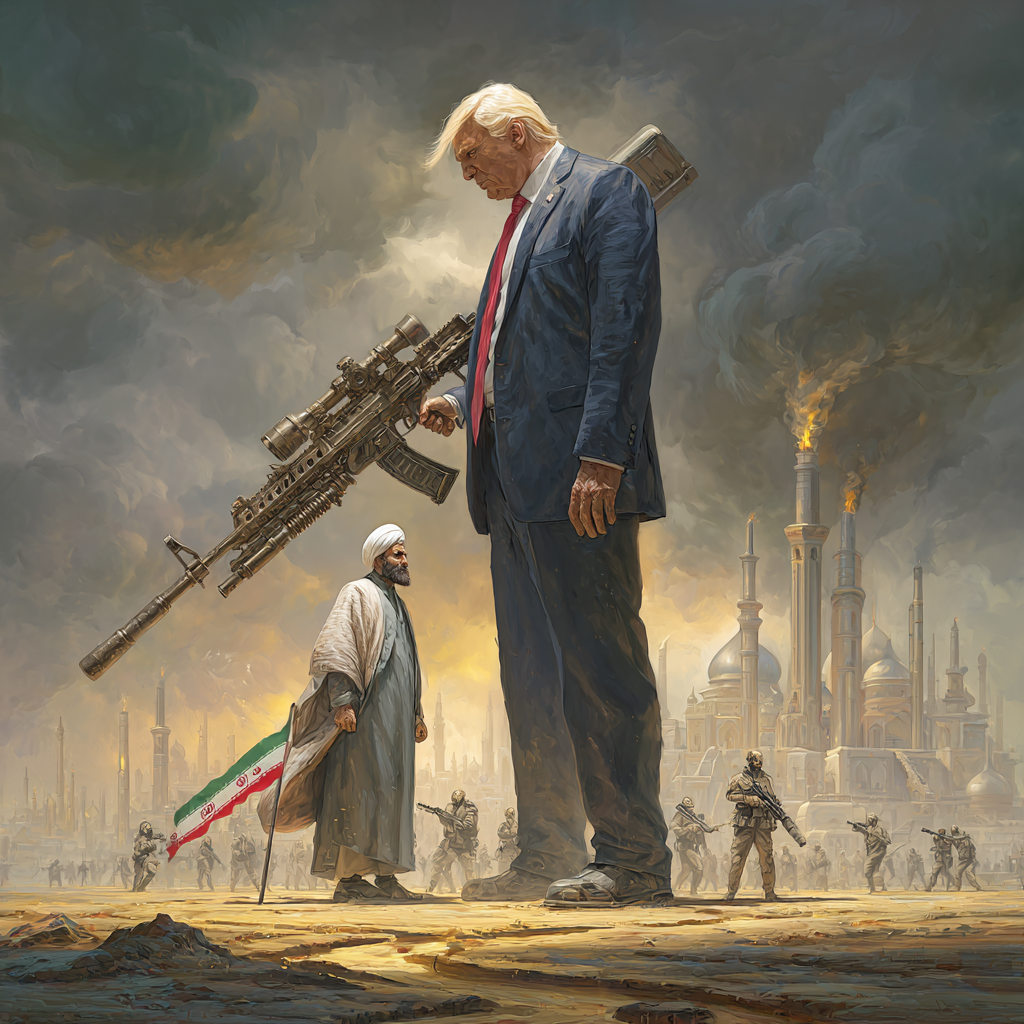
Iran – Trapped Between the Bullies
Iran has been trapped between bullies since 1952. Its survival game has been ongoing for almost three-fourths of a century. For Iran, the current conflict is about survival, not just another war. For almost 47 years, the country has faced sanctions, punishment, and steady pressure from powerful nations seeking to force compliance. Even after years of hardship, isolation, and accusations, Iran has remained resilient. This fight is about preserving its independence, protecting its resources, and standing up to those who want to control its future.
Iran has been trapped between the bullies since 1952. Their survival game has been ongoing for almost three-fourths of a century.
Trapped Between the Bullies
A boy from a caring, supportive family did well in school. Teachers admired his intelligence and saw him as someone with a bright future. But as he grew older, he started having trouble with school bullies.
Two rival groups of bullies, each strong in their own way, ruled the playground. They rarely fought each other, but everyone felt their presence. The school authorities knew about their intimidation but stayed silent because the bullies’ families were wealthy donors who supported the school.
The boy turned to his father, hoping for protection. Yet the father, though caring, felt powerless; the authorities were unwilling to act, so he compromised with the bullies’ families. His mother, however, offered unwavering encouragement. With her support, the boy grew resilient, bold, and courageous, standing his ground against the tormentors.
But the battle stretched beyond the schoolyard, spilling into the neighborhood. The boy’s isolation deepened, driving him to seek allies elsewhere. Despite his loneliness, he remained determined, resolute, and unyielding — facing the bullies not as a victim but as a fighter in a long war of endurance.
Assertion of Sovereignty
A boy from a supportive family did well in school. Teachers admired his intelligence and believed he would succeed. This boy stands for Iran, a country with a 2,500-year history, a rich culture, and a strong sense of pride, known for its resilience and potential.
Even while the boy was doing well, the bullies were already closing in. Britain had taken advantage of Iran’s resources for a long time to help its own economy and wanted to keep control. But for the good of the country, Iran’s Prime Minister decided to nationalize the oil fields and take back control.
That balance shifted dramatically in 1951, when Prime Minister Mohammad Mosaddegh nationalized Iran’s oil industry. For Britain, this was a devastating blow — the loss of lucrative economic benefits and strategic control. For Iranians, it was a moment of pride, celebrated as an assertion of independence. But for Western powers, it was a threat: a sign that their dominance was slipping.
Two Bullies at Play
Two groups of bullies controlled the playground. They did not often fight each other, but both used intimidation. In this analogy, the bullies are Britain and the United States. Britain had profited from Iran’s oil for years, while America, having become a superpower after World War II, sought an advantage in the Cold War.
Together, they planned the 1953 coup. Britain used Operation Boot and the CIA used Operation Ajax to remove Prime Minister Mohammad Mosaddegh after he nationalized Iran’s oil. The coup was not only about politics; it was also about protecting Western economic interests and keeping control.
The New Era of Bullies: Today, there are new bullies on the playground. In the current conflict between the U.S. and Israel against Iran, both countries act as aggressors. The United States uses tactics like sanctions under the “maximum pressure” campaign started in 2018, drone strikes on Iranian targets (such as the killing of General Qasem Soleimani in 2020), and economic isolation by banning Iranian oil exports. These actions are meant to control oil and rare-earth minerals and to regain lost influence. Israel uses covert actions like sabotaging Iranian nuclear sites, targeting Iranian scientists, and airstrikes on Iranian assets in Syria. These moves aim to increase Israel’s influence in the region and limit Iran’s power. Both countries show a pattern of using force and pressure to gain dominance in the Middle East.
A Pattern of Intervention: This kind of bullying is not new. Since World War II, the United States has carried out more than 200 interventions in Asia, Latin America, Africa, and the Middle East. History is full of examples, from coups to secret operations, including the recent abduction of Venezuela’s president and his wife. Each action shows the same mindset: to intimidate, destabilize, and control.
Israel’s Aggression: Israel’s part in this situation is also concerning. Its military actions have caused heavy losses, with tens of thousands of Palestinians killed, and its moves into neighboring areas have left lasting damage. In the schoolyard analogy, Israel is the bully who relies on alliances, using force to protect its interests while claiming to be legitimate.
Compromised Iran’s Sovereignty
The boy asked his father for help, hoping to be protected. But the father felt helpless because the school authorities would not step in. Instead, he gave in and sided with the bullies. This father stands for the Shah of Iran, who became a puppet ruler after the coup. By siding with Western powers, he was unable or unwilling to protect his people from foreign control.
But putting the Shah in power had serious consequences. Many saw his rule as illegitimate, a monarchy backed by foreign powers that weakened Iran’s independence. This anger grew for years until it finally led to a revolt. In 1979, Iranians rose up against the Shah, determined to end British and American control. The revolution was a turning point, rejecting puppet leadership and declaring that Iran would not accept foreign domination anymore.
Trapped From All Sides
The bullying did not remain confined to the schoolyard. It spilled into the neighborhood, destabilizing the boy’s friendships and forcing him to seek support elsewhere.
In global politics, the United States set up military bases throughout much of the Middle East, saying it was protecting its allies’ independence but at the same time isolating and pressuring Iran. Surrounded by hostile forces, Iran had to look beyond its region and build new alliances in Asia, Africa, and Latin America as Western pressure increased.
The conflict spread beyond the playground, destabilizing the entire neighborhood. Iran felt isolated, compelled to seek solidarity abroad to counter loneliness and build resilience. Guarding its sovereignty became a matter of survival. With enemies encircling it on all sides, Iran faced a stark reality: a do‑or‑die situation, where the big bully could arm‑twist or strike at any moment.
Secure the Benefits, Silence the Conscience
The school authorities knew about the bullies but did nothing. Their silence was not because they did not know, but because they were involved: the bullies’ families gave money to the school, and the leaders cared more about money than fairness. In world politics, these authorities stand for international groups and Western alliances that know about the bullying but do not step in because of money and power.
Institutions like the UN Security Council or Western‑led alliances such as NATO are fully aware of the intimidation but remain paralyzed. Their silence stems from dependence on the bullies’ families — the powerful elites who fund the “school.” Why shake the apple cart? Better to let the bully run his illegal errands while the authorities play the role of the three monkeys: see no evil, hear no evil, speak no evil.
For nearly 47 years, they allowed the bully to beat Iran with sanctions, embargoes, and arm‑twisting tactics. The punishment became ritualized, a cycle of pressure and humiliation. It was only when the Greenland conflict and tariff war escalated that some of these countries suddenly realized that a bully was at their door. This awareness made them understand that unchecked bullying could threaten their economy and destabilize the entire region.
Iran’s Courage and Resilience
The boy’s mother offered unwavering encouragement. She gave him resilience, boldness, and courage to face the bullies. In the geopolitical frame, the mother symbolizes Iran’s cultural pride and supportive allies — sources of strength that embolden the nation to resist intimidation even when isolated.
It is not easy to face punishment for refusing to comply while defending resources and independence for almost 47 years against a superpower. Iran has dealt with frozen assets, harsh sanctions, and unrest at home, as its people suffered from outside pressure. To make things worse, Iran is often blamed for problems and projected as the villain, a story told by those who gain from its isolation.
Yet Iran’s cultural pride, national spirit, and supportive partners — from Russia to certain non‑aligned nations — have provided encouragement. This maternal support has strengthened Iran’s resilience, emboldening it to stand firm against pressure. Like the boy who refuses to bow to the bullies, Iran has drawn on its heritage and alliances to guard sovereignty, even when surrounded and cornered.
Refusing to Bow to Bullies
The coup and what followed left a lasting wound. The boy’s long fight with bullies is like Iran’s many years of mistrust toward Western powers. The memory of foreign interference left a lasting scar, leading to strong opposition that resurfaced in the 1979 Revolution.
Even with sanctions, isolation, and threats, Iran stays determined. Like the boy who does not give in to bullies, Iran keeps fighting for its independence, facing a long and difficult struggle against great odds.
Before World War II, Britain was branded an imperialist power, having colonized vast territories and relying on intimidation to maintain control. Its tactics were those of a seasoned bully. After the war, Britain’s grip weakened, but the United States stepped into its place, inheriting the mantle of global dominance and applying the same methods of pressure, sanctions, and intervention.
Thus, the cycle of bullying did not end with Britain’s decline; it simply shifted hands. Iran’s defiance — its refusal to bow — stands as a testament to resilience in the face of repeated attempts by superpowers to dictate its destiny.
The Psychology of Bullying
The schoolyard analogy underscores a deeper truth: bullying is not merely about power, but about psychology. Britain and America acted as bullies, using intimidation and manipulation to secure oil and strategic advantage. The Shah’s compromise reflected weakness, while Iran’s resilience embodied defiance. These dynamics shaped generations of suspicion and resistance — a pattern that echoes even in the latest confrontations, such as Iran’s struggle against President Trump’s aggressive sanctions and rhetoric.
A bully’s attitude is: “I am the biggest bully here, so don’t mess with me. I make the rules, and you must follow them, which makes me happy. If you don’t, I will force you to comply.”
It is not only President Trump who should be seen as a bully and held accountable. The issue has persisted for nearly 47 years, and other U.S. presidents also bear responsibility, having imposed sanctions and employed various tactics to suppress Iran. Trump’s actions, however, represent the highest degree of bullying, intensifying the pressure and making the pattern of intimidation more blatant than ever.
Whether in 1953 or today, the US-Israel war with Iran, the pattern remains the same: powerful nations acting as bullies, exploiting weaker states to secure resources and strategic advantage. Iran, like the resilient boy in the analogy, continues to resist — determined to defend its sovereignty despite isolation, intimidation, and repeated assaults.



0 Comments