
The Circus of Power
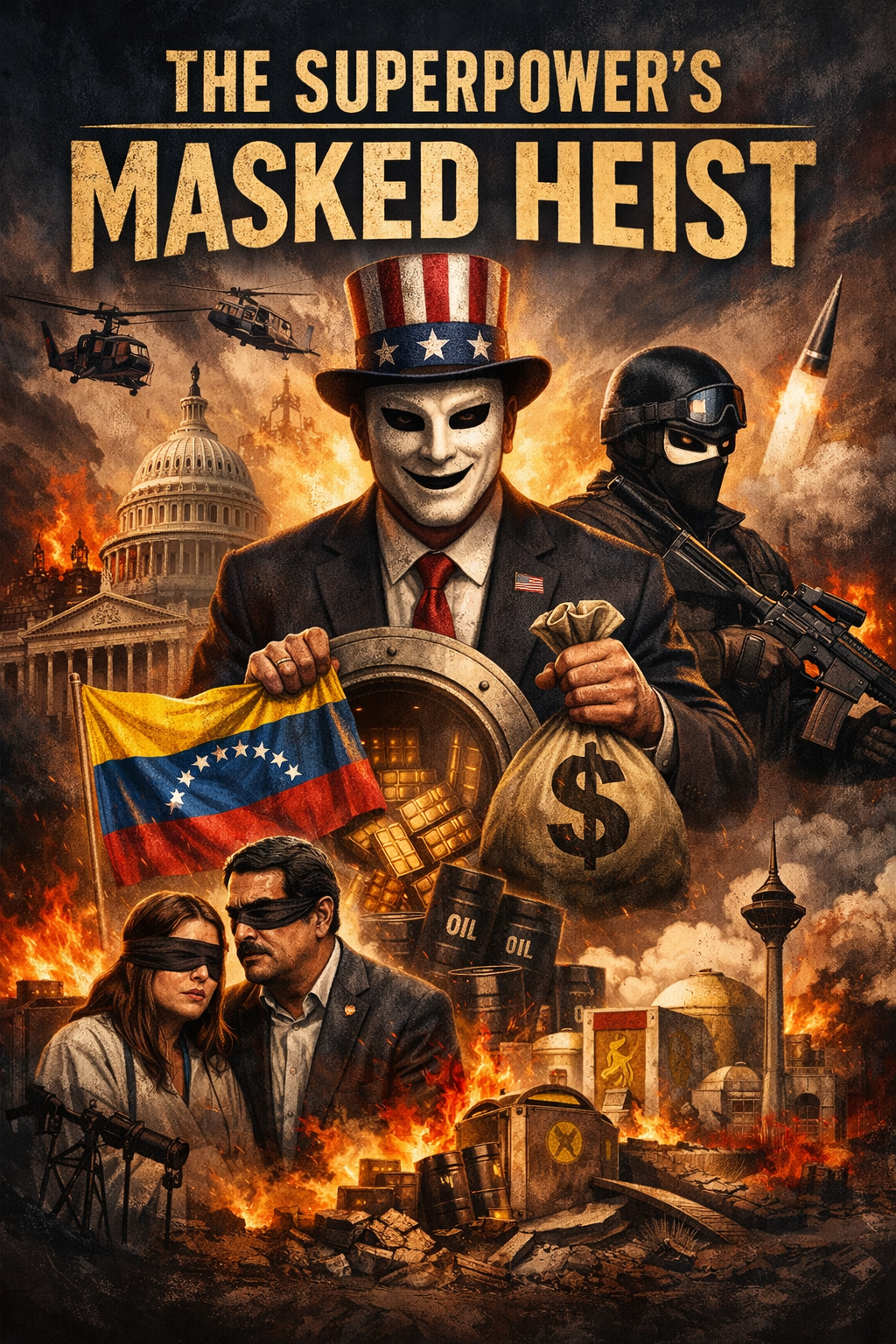
USA: The Superpower’s Survival Trap: Whenever a superpower makes a move, the whole world is watching. But, more often than not, what we see is less reality and more like a stage play—complete with costumes, scripts, and hidden motives. Take the abduction of Venezuelan President Nicolás Maduro and his wife in January 2026. It wasn’t just some covert military mission—it felt more like a high-stakes heist. Wrapped up in talk about democracy, terrorism, and fighting drugs, the United States did what would get smaller countries in serious trouble: taking a leader from another country, all to get a foot in the door to Venezuela’s oil.
Hiding Behind Legal Talk
Every big heist needs a good disguise. In this case, the U.S. wore the mask of legality. They said it was about stopping terrorists, fighting corruption and drugs, and defending democracy. But if you look past the official statements, the main act was plain to see: grabbing another country’s president without getting the green light from the world or even from Congress, and without regard for sovereignty.
Congress got involved, too, playing its part in this global drama. Some lawmakers spoke out against the U.S. acting alone, invoked the War Powers Resolution, and called for rules. But in the end, they didn’t push for Maduro and his wife to be set free. The official story sounded good enough, and the rewards were just too valuable to resist.
Cracking the Oil Vault Open
Every big heist has a prize, and in this story, it was Venezuela’s massive oil reserves—the biggest proven stash on the planet. U.S. corporations and lobbyists had their eyes on that vault for years, growing increasingly frustrated as Maduro kept the door shut and maintained alliances with Russia and China.
But once Maduro was out of the picture, the U.S. suddenly found itself holding the keys. Now, American leaders could decide who gets the oil deals, how much gets pumped, and who calls the shots in the world’s energy markets. Sure, politics were at play, but let’s be real—this was the psychology of survival. It’s about money. Congress saw the perks and let things move forward.
Congress: The Ringmaster of the Show
Think of Congress as the ringmaster in this wild circus. While they acted like they were holding back the dangerous lion, they were really just making sure the show didn’t stop. There were resolutions, there was debate, but everyone knew how it would end: the show rolled on, and the people taken in the operation stayed locked up.
Why does it always play out like this? Congress is always weighing what’s legal against what’s good for the country. And when oil, power, and global clout are on the table, the laws tend to get pushed aside. The ringmaster might crack the whip, but the lion isn’t going anywhere.
The Double Standard
The double standard couldn’t be more obvious. Just picture what would happen if another country kidnapped the U.S. president and decided to play by their own laws. Washington would call it an act of war, say it’s a huge violation, and defend the Constitution tooth and nail. But when the U.S. does something similar to Venezuela, suddenly it’s called justice.
That’s the heart of this whole masked heist: one set of rules for the big players, another for everyone else. Superpowers talk a big game about respecting countries’ independence, but then break those same rules when it suits them. They call out others for wrongdoing while doing the very same things themselves. It’s like wearing a mask of innocence and good intentions while pulling off a robbery.
USA – Superpower’s Survival Trap
At the end of the day, this masked heist is really about survival. Superpowers don’t just act out of confidence—they’re often driven by worry. The U.S. is anxious about losing its grip in Latin America, about China moving in, and about staying on top in the global energy game. Snatching Maduro wasn’t so much a power move as it was a nervous grab to keep control.
Here’s the twist: the tougher a country tries to look, the more its desperate moves show what it’s really worried about. This isn’t just about taking something that doesn’t belong to you—it’s about dressing up survival instincts as clever strategy.
All Eyes on the Show
The whole world is in the audience for this circus. Some people clap along, buying into the official story. Others see through the act and call it what it is: theft. Groups like the UN tried to call out the abduction as illegal, but their voices got lost in all the noise of the main event.
If you’re a smaller country, the takeaway is pretty clear: deals can change, promises might not last, and trusting the big players is risky. When a superpower wants something, it’ll find a way to get it—hook or crook.
Superpower’s Survival Trap Exposed
Every big heist leaves a mess behind. For Venezuela, it means losing control over its own country, seeing its president taken away, and knowing its resources might be next. For the U.S., it’s a hit to its reputation—the mask might fool a few, but the cracks are showing. Allies start to doubt the story, rivals point out the double standards, and that image of being the world’s moral leader starts to fall apart.
Congress isn’t off the hook, either. By letting this play out, they basically stepped back from their responsibilities. The War Powers Resolution was supposed to keep things in check, but here, it was more like a stage prop—good for show, but ignored when it really mattered.
Superpower’s Masked Heist Coverup
The U.S. and Israel repeat their usual approach to Iran, using the nuclear program as a pretext. Despite the IAEA clearances, the story persists as it benefits their goals. They justify sanctions and strikes by portraying Iran as a threat, bypassing international law and Congress. This strategy aims to weaken Iran’s sovereignty, control its resources, and expand influence, similar to tactics used against Venezuela. Congress often approves while the executive branch acts behind the scenes, cloaked in legal language, masking aggressive actions and ignoring international rulings to gain advantage.
Old Trick Backfired
If things had gone Trump’s way and Iran had backed down, many Americans would cheer him for stopping a nuclear Iran, and he would feel invincible. But because sanctions made Iran more determined, strikes failed, and the IAEA found the claims empty, the mask came off. The US-Israel war backfired, and the same old trick failed. Trump appeared reckless, and Congress criticized him, reversing what might have been celebrated if it succeeded. Superpower moves seem smart when successful, but a big mistake when they flop. The playbook that could have made Trump a hero instead revealed his shaky approach. A hero’s tale falls apart when the act is exposed.
Greed: Inbuilt Trap of the Superpower Masked Heist
The real risk with any system? Getting stuck in a rut. What starts out as a clever trick can become old news when greed keeps pushing for a repeat performance. The U.S. came up with a playbook—making aggressive moves look legal, wrapping up theft in words about democracy and safety. In Venezuela, the plan paid off: doors to the oil vault swung open, the president was taken, and the prize was within reach. That kind of win can go to your head, just like a thief who gets too bold after pulling off a few successful heists.
But when you keep using the same trick, people start to notice. A thief who always pulls the same move leaves clues behind—footprints, fingerprints, habits that neighbors pick up on. The U.S. tried the same playbook in Iran: sanctions, strikes, and talk of nuclear threats. But this time, the mask didn’t stay on. The IAEA cleared things up, showing the nuclear claims were empty, Iran stood its ground, and the world started to see past the act.
Greed is always the big weakness. Thieves keep going because they think they can’t lose. Superpowers do the same, believing their wins will keep coming. But every scheme has its soft spot. The masked heist that looked foolproof at first ends up being the trap that reveals all the hypocrisy. The crowd, once amazed, starts to laugh, realizing the lion isn’t really locked up—it’s the ringmaster who’s stuck.
Conclusion: The Mask Slips
America’s masked heist isn’t just a story about Venezuela—it’s a snapshot of how things work worldwide. It shows power can twist the rules, Congress can turn a blind eye, and survival often leads to double standards. It’s like a circus, where stealing is allowed if you’re strong enough to cover it up, and the mask of legality hides what’s really going on.
But masks don’t stay on forever. The more you wear them, the easier it is for people to see what’s underneath. Taking Maduro and his wife might have opened up Venezuela’s oil, but it also showed the cracks in America’s reputation. The world sees what’s really happening—even if the ringmaster keeps calling it justice.
In the end, this masked heist isn’t just about Venezuela. It’s about the way countries compete to survive, the double standards that come with power, and the circus of contradictions that shapes our world today.


0 Comments