
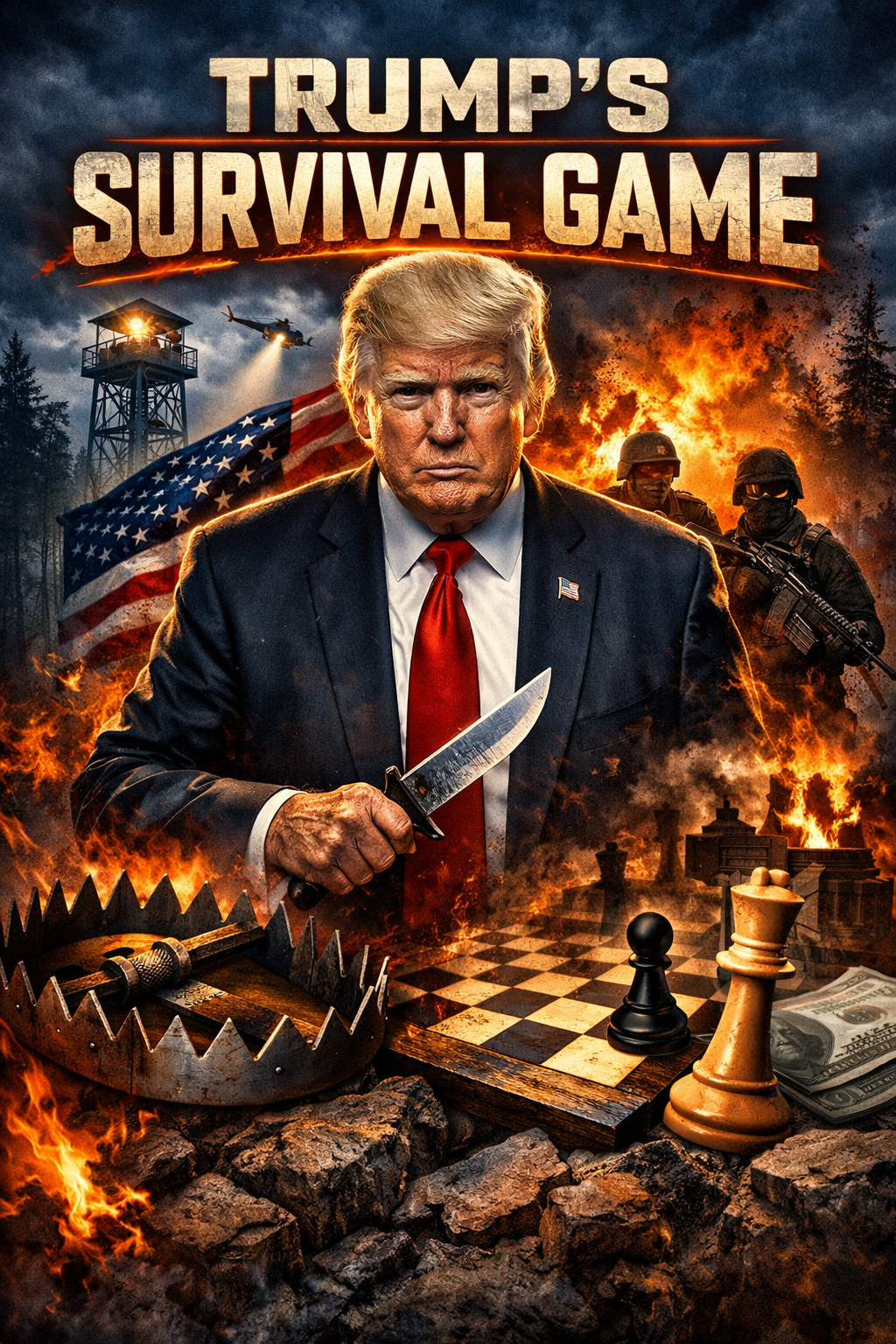
Fear is the most primal of human emotions. It is the signal that danger is near, the alarm bell that activates our Survival Mechanism. For ordinary individuals, fear may trigger lies to avoid punishment, silence to avoid confrontation, or aggression to ward off threats. For leaders, however, fear is magnified by power. Leaders who rise to power often carry with them unresolved anxieties — fear of exposure, fear of collapse, fear of irrelevance. Once in office, these fears do not vanish; they mutate into strategies that prioritize self‑preservation.
When survival is at the core of one’s being, all decisions will be routed through the Survival Mechanism. That transforms governance into a personal adventure of safeguarding oneself rather than collective well‑being.
A child lies to avoid punishment; a leader bends laws to avoid accountability. The mechanism is the same: survival first, truth later. When fear becomes the thermostat, every decision is guided by the leader’s need to safeguard themselves. The nation becomes a stage where policies are less about progress and well-being and more about camouflage to protect oneself.
Fear as the Trigger
Fear operates like a thermostat. Once it is activated, rational thought is sidelined, and survival instinct takes over. Leaders who feel threatened—whether by scandals, political rivals, or exposure of past wrongdoings—shift into survival mode. Their decisions cease to be about vision or policy; they become compulsive acts of defense. The threat is the signal, and the Survival Mechanism takes over.
This is why slogans, laws, and even wars often mask deeper psychological realities. A leader who fears collapse will project strength, not because the nation needs it, but because he needs it. The rhetoric of greatness becomes a shield against vulnerability.
The Case of Donald Trump
Donald Trump’s rise to power illustrates this dynamic vividly. His mantra, “Make America Great Again,” was less a national renewal project than a survival chant. America was already a superpower; the slogan was a projection of insecurity, a way to rally people around a narrative that safeguarded his own position.
Trump’s fear was not abstract. It was rooted in the possibility of losing power, of seeing his empire collapse, and of being exposed for past wrongdoings—such as the controversies surrounding the Epstein files. To him, survival meant staying in power “hook or crook.” Twisting laws, bypassing checks, using vetoes—these were not strategies of governance but tactics of fear.
Once trapped in this survival loop, Trump had little choice but to escalate. War became the ultimate distraction, a way to externalize fear and rally the nation around survival narratives. His personal fear trap became America’s collective destiny.
Netanyahu’s Parallel
Israeli Prime Minister Benjamin Netanyahu operates from a similar survival trance. Facing corruption charges and political instability, Netanyahu’s rhetoric of existential threat and his maneuvers to stay in power mirror Trump’s pattern. For him, survival means projecting Israel as perpetually endangered, justifying aggressive policies and conflict escalation.
Like Trump, Netanyahu transforms the nation into an extension of his personal defense system. His fear of losing power becomes Israel’s fear of annihilation. The leader’s trap becomes the nation’s trap.
The Illusion of Invincibility
The survival trap offers leaders a paradoxical reward. If they win—whether through war or spectacle—they become heroes. Their past wrongdoings are erased, their scandals forgotten, and they are elevated to mythic status. Invincibility becomes an illusion.
Yet this invincibility is fragile. It is built not on vision but on fear. The leader remains trapped, compelled to seek perpetual victories to keep the shadows at bay. The nation, meanwhile, mistakes survival-driven triumphs for genuine greatness.
The Mask of Concealment
Concealment is fear’s natural companion. Leaders who dread exposure often create systems that shield them from scrutiny. President Trump’s exemption from IRS audits is a striking example. By removing himself, his family, and his businesses from future tax oversight, he transformed a public institution into a private shield.
This act was not about strengthening the tax system for citizens; it was about insulating one man from the possibility of collapse. Concealment here is not passive — it is weaponized. It projects strength while hiding fragility, creating the illusion of invincibility. Yet the mask is thin: beneath it lies the same fear that drives every survival mechanism.
The Illusion of Benefit
Citizens may believe they benefit when their leader appears strong. They may rally around slogans, tax cuts, or symbolic victories, mistaking them for genuine progress. But these are side‑effects of the leader’s survival strategy, not its purpose. The true aim is self‑protection.
The illusion is seductive: if the leader survives, the nation feels secure. Yet this security is borrowed, not earned. Institutions hollow out, accountability fades, and the people inherit fragility disguised as strength. What looks like a benefit in the short term becomes erosion in the long run.
Stealth Shield Protecting The Leader’s Fragile Ego
The stealth shield around the inflated balloon is not built for the nation’s protection but for the leader’s fragile ego. Each legal maneuver, each exemption, each rhetorical flourish becomes another invisible layer of defense. Yet shields of fear are brittle; they do not strengthen the balloon but only delay its inevitable rupture. The more layers added, the more pressure builds inside, and the more catastrophic the collapse when exposure finally pierces through.
Citizens Are Deceived
For the citizens, this shield is deceptive. It projects an image of invulnerability, as though the leader’s survival ensures the nation’s stability. In reality, the people are left orbiting around a balloon that floats on falsification. Their trust, their institutions, and their future are tethered to a fragile construct designed to keep one man’s fears hidden. When the balloon bursts, it is not only the leader who falls — the fragments scatter across the society, leaving citizens to pick up the pieces of a system hollowed out by fear.
Implications for Nations
When leaders operate from survival traps, nations inherit their fears. Policies become compulsive defenses, wars become distractions, and rhetoric becomes survival chants. The collective destiny is hijacked by individual interest.
This is why nations often repeat cycles of conflict. The leader’s fear becomes the nation’s fear, and history becomes a series of survival games.
Conclusion
Fear is a deeply rooted emotion, and when it takes hold of leaders, it can turn governance into a matter of survival. Trump and Netanyahu show how fear-based survival instincts can lead nations into endless cycles of conflict, spectacle, and illusion. Choices are often guided by the Survival Mechanism, with heroism helping to forgive past mistakes, and the false sense of invincibility taking over.
It’s unfortunate that nations often confuse short-term victories driven by survival instincts with true greatness. For example, a child might lie to escape punishment, and a leader might win wars to soothe feelings of guilt. In many ways, both are motivated by the same deep, primal instinct.
Fear can sometimes help a leader stay afloat, but it can also pull the nation into their personal struggle. Victories might seem like masks, hiding their true vulnerability. While the leader may seem invincible, deep down, fear often lingers beneath the surface.
Ultimately, fear acts as a survival trap for leaders because of their inflated self-image built up over the years, which isn’t actually true; so, they feel the need to protect it. Every politician enters the political arena carrying their past baggage with them. This reminds us that the fate of nations is often determined not by a shared vision but by the basic fears of individual leaders. Until leaders learn to move beyond their fears, nations will stay stuck in survival struggles, confusing their relentless pursuits of victory with genuine greatness.



0 Comments