
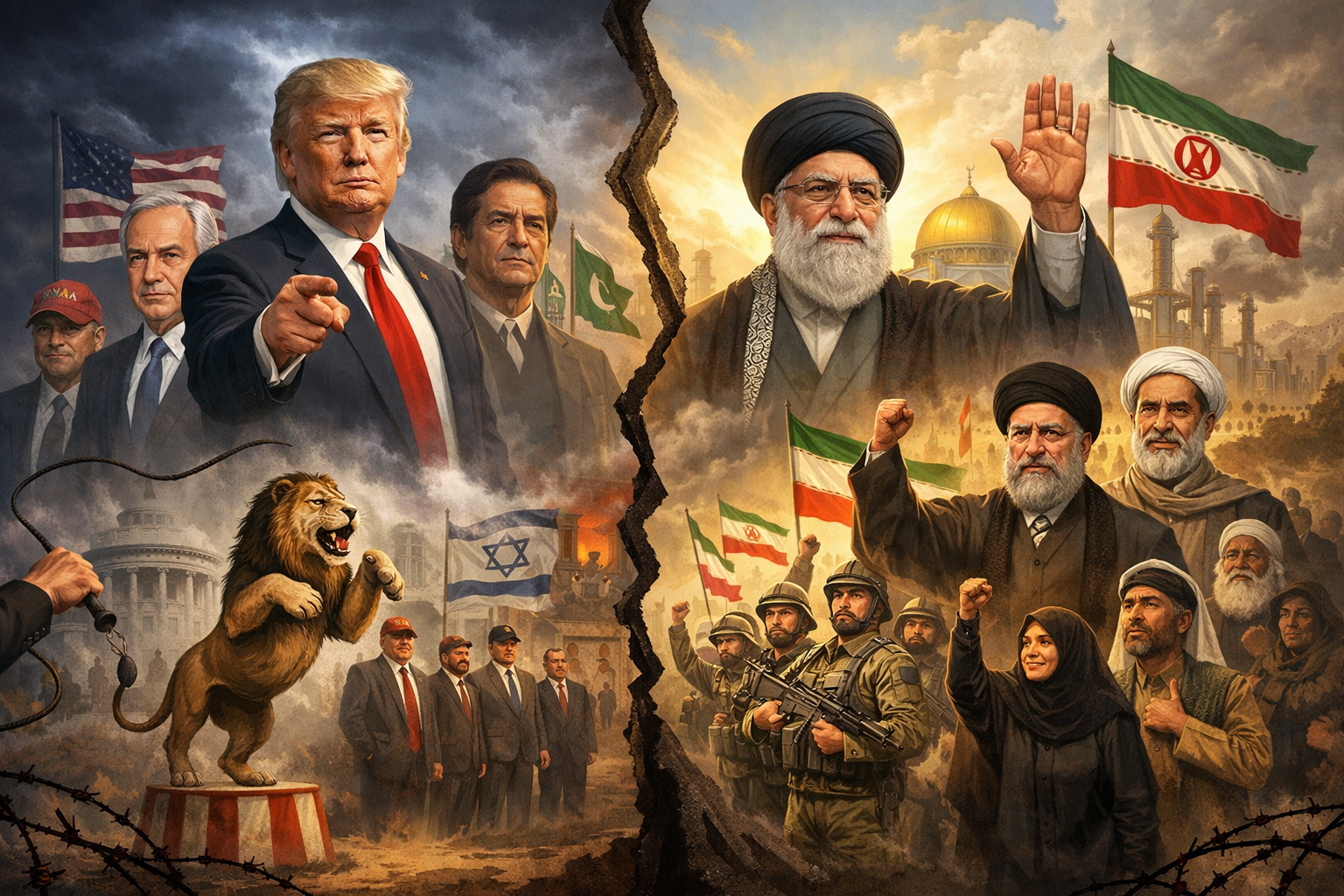
At the heart of modern conflicts between great powers and sovereign nations is a recurring pattern of a colonial mindset. When foreign powers attempt to impose their will upon independent peoples, they inevitably encounter the unbreakable force of collective self-determination. This essay contends that in the cases of Vietnam, Iran, and India, it is not military or economic power but the psychological drive for sovereignty. The enduring spirit and unity of the people—which ultimately determine the outcome of such struggles—are freedom from the colonial mindset.
History, much like the changing of seasons or the migration of birds, rarely repeats in perfect symmetry. Instead, it echoes in patterns that are familiar yet distinct. The U.S. war in Vietnam and its enduring standoff with Iran are not mere reruns, but variations on a theme: the colonial mindset, where an outside force seeks to script the fate of sovereign peoples, stifling their collective will and substituting imposed ideology for authentic liberty. In these struggles, it is not military might but the indomitable spirit of the people—their psychological drive for self-determination—that ultimately shapes the outcome.
Vietnam: Denying the People’s Choice
Vietnam’s journey was, at its core, a quest for self-determination—a psychological imperative as old as survival itself. After enduring centuries beneath the shadow of French colonial rule, the Vietnamese people yearned for autonomy. Ho Chi Minh became the living symbol of this drive, fusing the language of communism with the deeper current of anti-colonial resistance. The Geneva Accords of 1954 dangled the promise of nationwide elections, yet the U.S., wary of the people’s true choice, intervened to halt the process. Instead of honoring the collective will, Washington installed a favored elite, attempting to engineer destiny from afar.
This was not simply a matter of containment; it was an intrusion into the psychological ecosystem of a nation. The U.S. behaved as if it could fence off the natural instincts of a people, dictating their choices from a distance. Predictably, such interference only fortified resistance. Like a river meeting a dam, the collective will found new channels, strengthening the Viet Cong and rendering the war unwinnable. In the end, it was the people’s enduring spirit—their innate fight for liberty—that outlasted foreign intervention.
Iran: Sovereignty as Collective Endurance
Iran’s path, in many ways, traces the same psychological contours as Vietnam’s. After the 1979 revolution, Iranians cast off monarchy and external dominance, anchoring themselves to the principle of sovereignty. The U.S., unable to relinquish its grip, responded with sanctions, embargoes, and military threats—tools designed to reshape the collective will. Yet, as with the Vietnamese before them, the Iranian people have shown a remarkable capacity to endure hardship, drawing strength from the deep well of their desire for self-rule.
The distinction emerges in the spirit animating the struggle. For Iran, sovereignty and the well-being of its people are not imposed from above but arise from a shared sense of purpose. The majority is not compelled by force, but drawn together by a collective mission—a psychological glue that binds and fortifies. This unity becomes Iran’s greatest asset, transforming endurance into leverage. When the time for negotiation arrives, Iran’s demands will carry the weight of legitimacy, grounded in the authentic will of its people.
India: The Spirit of Freedom Against Empire
India’s long struggle for freedom against the British Empire introduces yet another layer to this recurring pattern. The inclusion of India in this comparative analysis is deliberate: like Vietnam and Iran, India’s experience demonstrates how foreign attempts to dominate or dictate national destinies are ultimately confronted by a unified drive for sovereignty. While each context differs in history and outcome, all three reveal how popular self-determination can outlast and repel the exertions of external power. For almost two centuries, Britain projected its colonial mindset onto the subcontinent, extracting resources and suppressing the native drive for autonomy. Yet, beneath the surface, the Indian spirit of resistance simmered—manifesting in the 1857 uprising and later in Gandhi’s non-violent movement. This resistance was not merely political, but a psychological assertion of the people’s will.
India’s battle for independence transcended politics; it was a cultural and spiritual awakening. Millions, separated by caste, religion, and language, converged in a shared quest for liberty. The British, blinded by the intoxication of imperial ego, imagined they could script India’s future indefinitely. Yet, the collective spirit of sovereignty—like a river carving its own path—proved unstoppable. In 1947, India’s independence became a testament to the collapse of colonial power when faced with the unified will of a people determined to reclaim their destiny.
Survival Mechanism (Ego) vs. Sovereignty
The U.S. stance in both Vietnam and Iran reveals a psychology shaped by ego and the allure of power. In Vietnam, the drive to contain communism eclipsed questions of legitimacy. In Iran, the pursuit of dominance has come at the expense of alliances and economic stability. In both instances, self-interest and colonial mindset have overridden the broader welfare of nations, illustrating how unchecked ego can distort the survival instincts of even the most powerful actors.
In contrast, Vietnam, Iran, and India exemplify the psychology of sovereignty. Their struggles are not fueled by ego, but by the pursuit of liberty. Endurance becomes a collective act, sacrifices are chosen rather than imposed, and unity forms an unbreakable shield. This fundamental difference in spirit explains why external powers ultimately falter: ego is brittle, but the will to survive—rooted in sovereignty—endures.
The Fate Repeated
Vietnam’s story concluded with U.S. withdrawal, a loss of face, and the erosion of credibility. Iran’s path appears to be tracing a similar colonial mindset. The U.S. finds itself unable to secure outright victory, for it is contending with the deep-rooted will of a sovereign people. Over time, negotiations will tilt in Iran’s favor, as endurance and unity become powerful bargaining tools. Ultimately, the U.S. will be compelled to step back, recasting retreat as triumph—an echo of the narrative that followed Vietnam.
India’s independence stands as a reminder that sovereignty ultimately prevails over the ambitions of empire. The collective will of a people, their spirit in pursuit of liberty, acts as a force that external domination cannot withstand. Vietnam demonstrated this truth, India affirmed it, and Iran continues to bear it out in the present.
Conclusion:
Vietnam, Iran, and India may be divided by time and geography, but they are united by a common narrative. External powers, drawn by the intoxication of ego, attempt to script the destinies of others. Yet, sovereign nations, strengthened by the collective will of their people, resist and endure. The colonial mindset acts as a blindfold, obscuring the enduring truth that liberty and sovereignty outlast ego. While the U.S. may engage in its own survival strategies, it is ultimately the spirit of the people that secures the victory of sovereignty.


0 Comments