
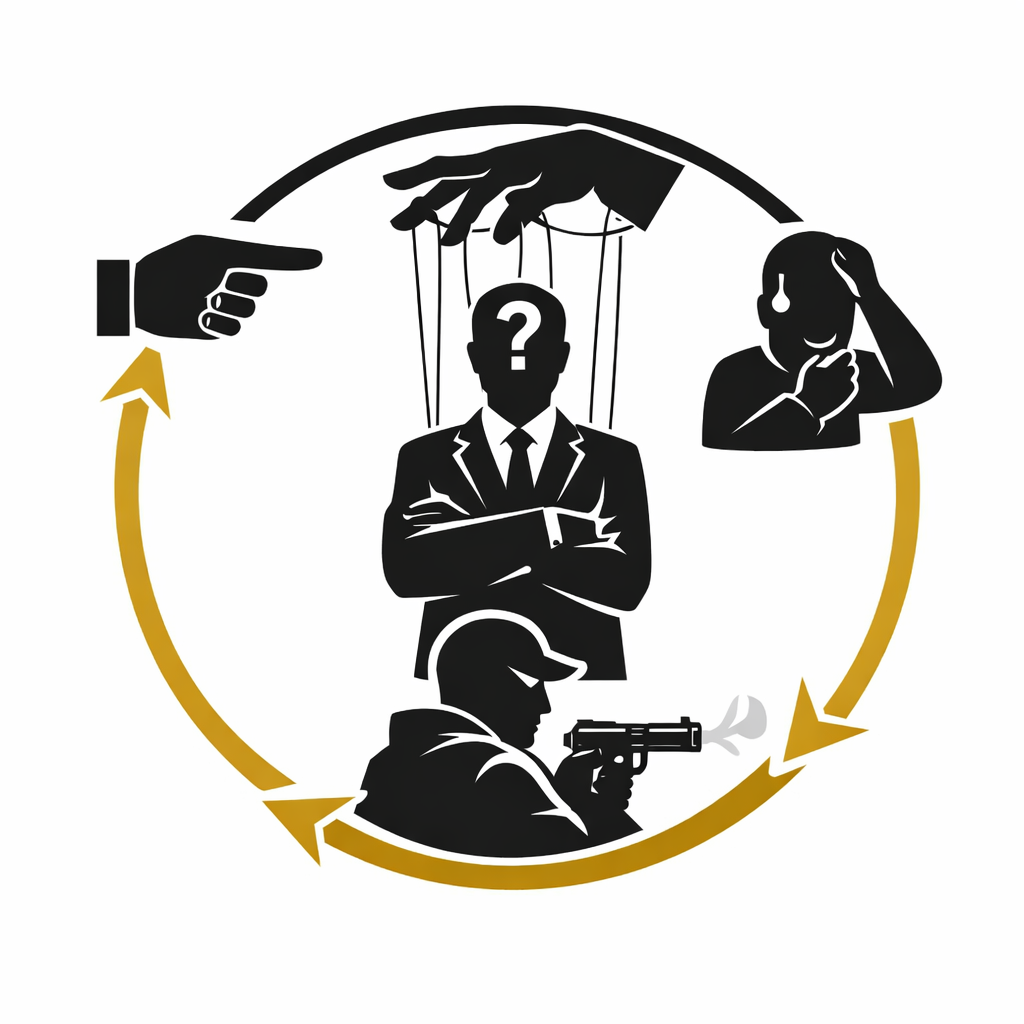
This work is not about President Trump as an individual, nor is it meant to be a partisan critique. It is about the universal survival patterns revealed through his actions. Because his behavior is so publicly visible — broadcast visually and auditorily to the entire world — he serves as a vivid example. The patterns described here are not unique to him; they are human patterns, observable in leaders, communities, families, and individuals across cultures. Trump’s conduct simply provides a magnified lens through which these unconscious mechanisms can be studied and understood.
To know more about Survival Mechanisms and their traits, you can read “Stop Surviving Start Living With Freedom” and “The Self Decoded.” These works explore how our unconscious survival trance shapes decisions, behaviors, and communication — whether in personal life or on the global stage.
Leadership is shown not only by a leader’s decisions but also by the people they choose to work with. President Trump’s inner circle is a clear example. Rather than building teams that challenge him, he gathers people who echo his views. Most of those close to him, whether in official positions or as loyal supporters, share his mindset. His team resembles a mirror of his own instincts and Survival Mechanism rather than a diverse advisory group. The phrase “birds of a feather flock together” aptly describes this. Those around him tend to prioritize control, loyalty, avoiding blame, and showing off—traits that support his worldview instead of questioning it.
Control Over Others
Control is at the core of how Trump’s team operates, with dominance taking priority over leadership. Obedience is expected, and those who comply gain influence, while those who disagree are pushed out. This creates an environment where disagreement is seen as betrayal, and loyalty is valued above everything else. In this setting, skills, independent thinking, or honest feedback matter less than showing constant loyalty.
Deflecting Blame
Deflecting blame is a key feature. Mistakes are rarely admitted and are often blamed on others. Trump presents himself as free from failure, while his team takes the blame. This approach protects his image and highlights the transactional nature of his relationships. Advisors are valued more for their willingness to accept blame than for the advice they give.
Transactional Mindset
His leadership is based on a give-and-take approach, where relationships depend on usefulness—what someone can do for him and whether they will stay loyal during hard times. Advisors who support him are rewarded, while those who disagree are seen as disloyal and are removed. This builds a team that repeats his views, boosts his image, and strengthens his feeling of invincibility.
Echo His Rhetoric
In Trump’s circle, conformity is encouraged on purpose. People who repeat his words and show his confidence gain influence, while those who question or soften the message are pushed aside. This leads to a group of similar voices, all repeating the same message of power and intimidation.
Follows Wrong Map
Trump’s leadership is like a general in a survival game who insists the map is right, even when there are signs of danger. Scouts might warn about risks, but turning back would mean admitting a mistake, so he keeps going. Only those who support his direction stay on the team. This shows how he makes decisions: he listens to advice but usually only from those who agree with him, while others are pushed aside.
Align to His Mindset
It may seem that Trump “does not take advice,” but in fact, he does—just from those who agree with him. He welcomes supportive advice and ignores opinions that conflict with his own. People who raise concerns or disagree often lose influence or access, and sometimes they are removed from their roles. Some dissenters choose to resign when they see their input is not wanted or their loyalty is doubted. This creates a cycle: his views shape the team, and their agreement strengthens his position. Different opinions are undervalued and seen as weaknesses. As a result, the team reflects the leader’s mindset, supporting traits that help him survive instead of balancing them.
Allies – Similar Pattern
This pattern goes beyond Trump’s team at home. His relationships with foreign leaders often show the same survival instincts. Leaders such as the Prime Ministers of Israel or Pakistan act in similar ways. For example, leaders like Benjamin Netanyahu have emphasized loyalty within their parties and sidelined critics, focusing on projecting strength in the face of both internal dissent and external pressure. Similarly, past leaders in Pakistan have concentrated power among trusted allies and treated opposition as a threat rather than a source of feedback. They show strength, demand loyalty, and see disagreement as betrayal. These relationships are built on shared authority and dominance. Just as Trump chooses allies who agree with him, he connects with leaders who share his survival mindset. The rule stays the same: agree and stay, or disagree and be left out.
Like-minded Consensus
Trump’s leadership depends on agreement among people who think alike, not on a mix of different views. Disagreement is seen as disloyalty, which leads to people being excluded or choosing to leave. The team stops being a group of independent thinkers and instead copies the leader’s mindset. This is why the saying “bullies love bullies” fits: bullies look for allies, not opponents. They are drawn to people who show confidence, want control, and resist compromise.
Survival Focused Mindset
All these patterns add up to a fortress mentality, with high walls, guarded gates, and an echo chamber. Advisors and allies are closely watched for loyalty, and there is little room for negotiation or compromise. People see issues as either wins or losses. By ignoring other viewpoints, Trump becomes more isolated, which in turn breeds greater insecurity and distrust. As a result, his team and allies take on his survival-focused mindset and keep moving forward, even when there are risks.
In short, President Trump’s leadership is shaped by a survival mindset that values loyalty more than expertise, control more than teamwork, and showmanship more than humility. His team shows these same traits, and his allies do as well, creating a global echo chamber where disagreement is punished and agreement is rewarded. This reduces the range of opinions until only one view is left. As a result, decision-making often becomes more about personal loyalty and less about evidence or open debate. Policies may be made without considering alternative perspectives or potential risks, leading to less effective outcomes. The health of institutions can also suffer, as experts are sidelined and watchdogs are viewed with suspicion, weakening the checks and balances needed for stable governance. It is a leadership style based more on survival instincts than on practical wisdom, moving forward even when there are risks.
As in any survival game, a bully’s strength comes not from being fair, but from gathering people who follow the same strict rules.
NOTE: Much of his behavior and communication operates as unconscious safeguards, designed to shield the fragile construct of his Survival Mechanism (ego). This Survival Mechanism is an inborn protective mechanism rather than an authentic core, compelling him into patterns of defense and preservation. He acts not out of deliberate choice but as part of nature’s larger design, following instinctual currents that dictate survival. The birth programming is such that his actions are driven more by his Survival Mechanism than by conscious awareness—he does what he must because his psyche’s structure leaves him no other choice. It is as if he is under a hypnotic spell, operating on autopilot. Humanity as a whole operates through different Survival Mechanisms, which can be updated with awareness.



0 Comments