
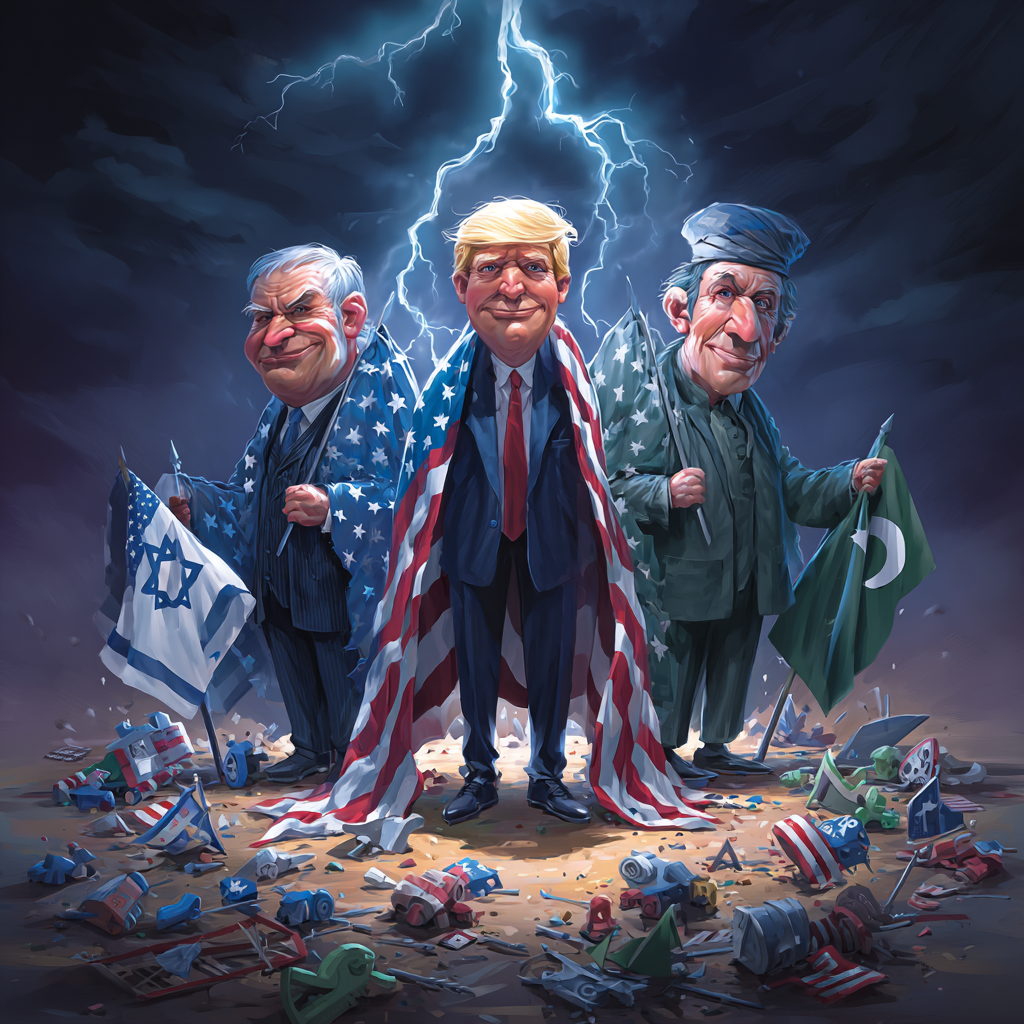
Relationships are built on trust. Whether it’s a couple or a family, the way we relate is important. It can be a taxi ride, a flight, or a train journey—all involve entrusting the driver or pilot with your safety. Similarly, countries operate as units with their own personalities, and how they interact with neighbors or other nations largely depends on their leadership.
After the Shah of Iran returned to power, unrest continued to grow. As the United States and Britain lost influence in Iran, Washington expected the Shah might eventually be overthrown. To protect its interests, the U.S. passed the International Emergency Economic Powers Act (IEEPA), which allows the president to suspend financial transactions and seize foreign assets during emergencies.
Iran was the first country targeted under IEEPA. The law was used to freeze assets and pressure Tehran into negotiations. The problem is that the U.S. acts as both referee and player, making the process seem unfair. Other countries have no say in the rules but are still punished. It’s like a game where one side controls everything—the whistle, the scoreboard, and the prize.
I am the Player and the Referee
Iran kept nearly $12 billion in U.S. banks and had paid $400 million for American military equipment. The U.S. froze these assets, giving different reasons over time. At first, it looked like a legal step, but it was really a show of power. This move told Iran and the world that Washington could not be trusted as a neutral guardian.
The situation was unfair in two ways. First, the money did not belong to the U.S., but Iran’s deposits and securities were still frozen. Second, the U.S. broke its own agreement by failing to deliver the military equipment or to return the payment. These actions showed the U.S. was more focused on its own interests than on justice.
By any fair standard, the U.S. should have faced consequences for breaking its promise and failing to honor the agreement. But who could hold it accountable? The United Nations, which relies on U.S. funding and influence, was powerless—unable or unwilling to challenge the country that supports it.
The Message:
“I love you if you dance to my tune.” In other words: Don’t trust me.
Whenever things do not go Washington’s way, the U.S. uses the International Emergency Economic Powers Act (IEEPA). The law was first used against Iran in 1979, when it froze Iran’s security deposits and other assets. What seemed like a legal move was actually a one-sided law, with the U.S. acting as both player and referee.
By enacting IEEPA and applying it to Iran, the U.S. sent a clear message: it is not a reliable partner. If outcomes don’t align with its interests, it can blow the whistle, declare the opponent guilty, and walk away with the prize.
No other country has a law quite like IEEPA. It is a rule created by the U.S. to be used against others, with enforcement left solely to the president. There is no international body to oversee its effects or ensure it is fair. This means one side controls the whistle, the scoreboard, and the prize, while smaller nations are forced to play by rules they never agreed to or helped create.
How do you feel?
Picture this: you go to an ATM, take out your own money, and walk outside. Suddenly, someone points a gun at you and says, “Give me the money.” You have no choice but to hand it over. Would anyone call that generosity, saying, “the person was in need, so you gave it away”? Of course not. That is simply coercion.
This is the effect of laws like IEEPA. They create fear in other countries, forcing them to obey agreements they had little say in making. The rules can change at any moment, but countries still have to follow them without question. The message is simple: obey, or face punishment.
The unpredictability makes things even worse. The rules might say one thing today and something else tomorrow. Smaller nations have no say in changing these rules. They are forced to follow them, even when the system is unfair.
Does that seem like a fair deal? Or is it more like the ATM daylight robbery—a transaction that looks legal but is really based on intimidation?
IEEPA – Blackmail Tool
The International Emergency Economic Powers Act (IEEPA) acts less like a fair law and more like a tool for blackmail. It is used to pressure countries, keeping them from their own money until they accept political demands from Washington. The freeze is never neutral; it is meant to force countries to change their behavior.
The gap between what America says and what it does is clear. The U.S. talks about freedom, fairness, and democracy, but acts in ways that take away another country’s independence. By freezing assets and setting conditions, it sends a message of force, not partnership: obey, or be punished.
The contradiction is obvious. A country that says it stands for freedom instead uses economic threats to get its way. For smaller nations, the lesson is clear: agreements depend on conditions, promises can be broken, and trust is something they cannot risk.
The Double Standards and Mistrust
Even when Iran was not attacking the United States, Washington still imposed sanctions and froze assets. Allies who did similar or worse things were often let off, while enemies were punished more harshly. The U.S. says it stands for trust, stability, and fairness, but its actions show it will bend the rules when it wants. This is why Iran and many other countries see America as unreliable.
The difference between what the U.S. says and what it does is clear. It talks about freedom and democracy, but also uses economic pressure, freezes assets, and enforces rules unevenly. This gap leads to a serious lack of trust.
Take Israel as an example: even though it has taken military action against its neighbors and caused regional tensions, it still gets U.S. support, aid, and diplomatic help. Iran, on the other hand, faced sanctions and asset freezes even when it was not attacking the U.S. This creates a paradox—one country is punished for hostility, while another is rewarded for the same actions.
The message to the world is clear: rules are not the same for everyone, but depend on whether you are an ally of the U.S. or not. For Iran, this shows the U.S. cannot be trusted. For others, it is a warning: “Even if you play by the rules, you may still be punished. And even if you break the rules, you may still be protected—if you are useful to the superpower.”
Bullies Love Bullies
Imagine a schoolyard. The biggest bully walks around, locking up valuables and making threats. He says he is the protector, but everyone knows he is strong and intimidating. Smaller bullies gather around him—loud, aggressive, and eager to show off. They push others, take lunchboxes, and brag about how tough they are.
The big bully smiles. He likes their hostility because it matches his own. He gives them protection, candy, and praise. Their aggression helps him, showing that his group is strong. Together, they create a circle of intimidation.
But outside that group are the outcasts—the ones who will not follow the bully’s rules. They are punished, left out, and mocked. Their valuables are taken, and they are not allowed to speak up. The bully claims it is about fairness, but everyone sees the double standards: his friends can fight and still get rewards, while his enemies are punished even if they try to make peace.
This is the survival game that nations play. The U.S. supports allies like Israel and Pakistan even when they act aggressively, because their actions help its strategy. Iran, on the other hand, is treated as an outsider—punished for standing up to the U.S. and denied access to its own resources. The message is clear: “If you bully with us, you are protected. If you resist us, you are punished.”
This makes the paradox even stronger: even the superpower, the “big bully,” feels insecure. It gathers other bullies around not because it is confident, but because it is afraid—afraid of being alone, losing control, or not surviving. Even though a superpower seems the strongest, it can feel threatened by the unpredictable actions of other nations, the pressure to maintain its status, or the fear that its influence might shrink. The world is constantly changing, and new rivals or alliances can challenge its position at any time. This fear of losing power can drive a superpower to act aggressively, form tight groups of allies, and use harsh tactics, all to make sure it stays on top.
Conclusion
The current conflict between the U.S., Israel, and Iran is not just about military actions. It is about mistrust, blackmail, and bullying coming together to control a country that has not directly attacked either of them. Over the years, Iranians have learned a tough lesson: America’s words and promises cannot always be trusted. What is said about freedom and fairness is often contradicted by actions such as coercion, asset freezes, and sanctions.
This gap between what is said and what is done has created deep mistrust. For Iran, every broken promise and broken agreement proves that the U.S. cannot be trusted. For the rest of the world, the message is also clear: the superpower enforces rules only when it wants to, rewarding allies even if they are hostile and punishing enemies even if they have not acted against it.
So, the conflict is not just about land or weapons. It is really about power and how it is used. This is a survival game where mistrust is common, blackmail is a tool, and bullying is the main approach. In this situation, Iran’s lack of trust is not a weakness, but a natural reaction to years of broken promises and actions that do not match words.


0 Comments