
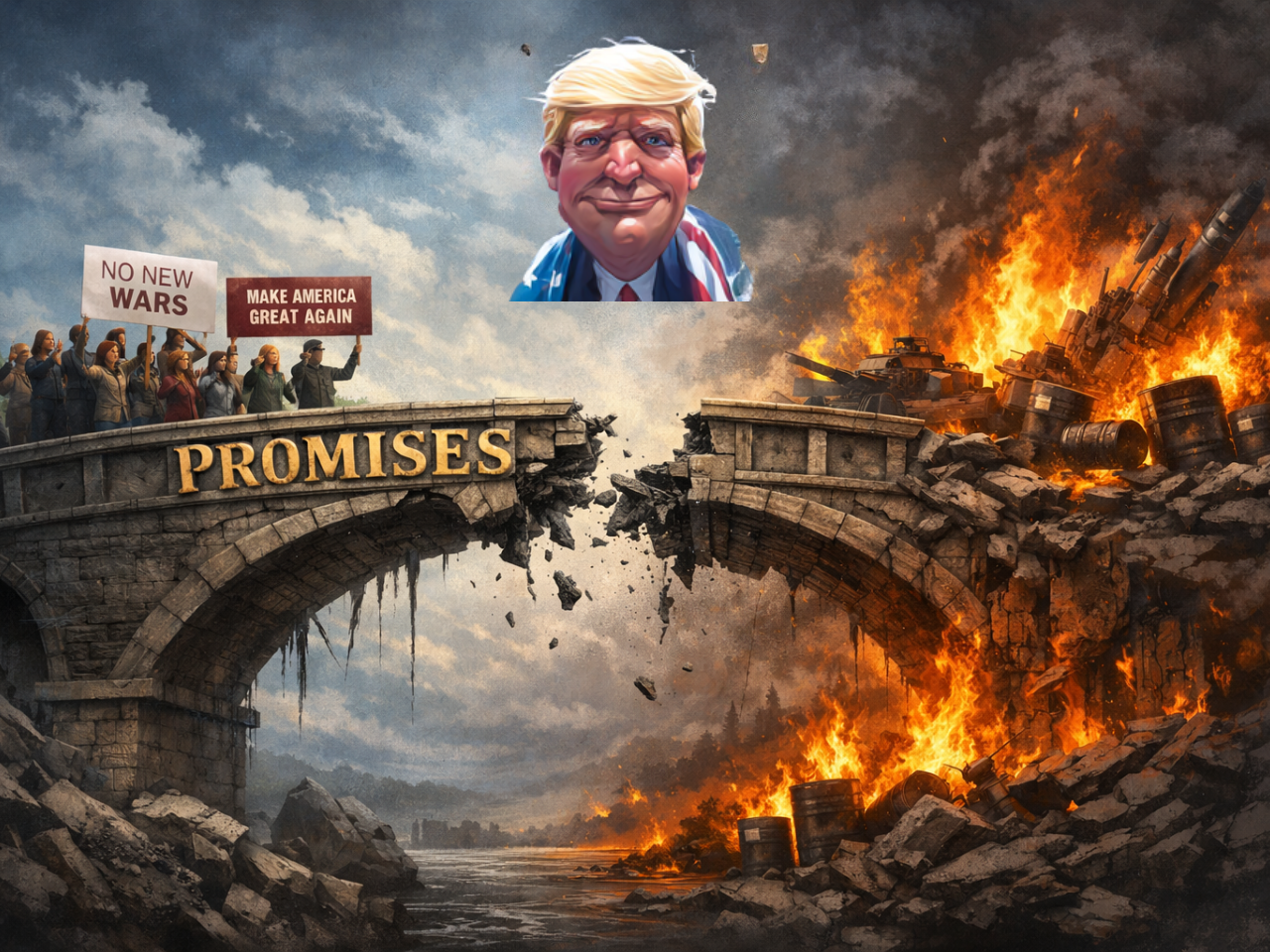
Trump’s Survival Games – Trust Deficit
People often judge leaders by whether their actions match their words. With President Trump, this match is often missing. For example, during his campaign and time in office, he repeatedly promised to “drain the swamp” in Washington, signaling a clean break from political insiders. However, after taking office, he appointed several former lobbyists and insiders to key positions, contradicting his original message. Another instance is his public commitment to protecting and improving healthcare, yet his administration supported policies to repeal parts of the Affordable Care Act. These specific examples show his habit of making big promises and then acting in ways that contradict them. There seems to be an unconscious survival trap, a strategy that helps him keep power but makes people trust him less. Trump’s approach is built on the idea of “Fake it till you make it.” For him, it’s not just a saying but a way to do politics and be in power. The promise is the “fake,” and following through is the “make.” This cycle helps him hold onto power.
Tall Promises – Fake It Till You Make It
Trump often uses exaggeration in his speeches, promising things that speak to what his audience wants most: peace, prosperity, and dignity. For instance, he said he wouldn’t start new wars, which appealed to people tired of conflict. These promises make his supporters feel seen and important, almost as if they were giving them hope as a gift. His speeches are like performances, in which he presents ideas such as peace and prosperity as new. The “no new wars” promise was meant to reassure and inspire. The audience perceives it as a novel act, but behind the scenes, the same old agenda remains. For Trump, the “fake” isn’t a lie, but a way to make things seem new and legitimate.
The Campaign Rhetoric
His campaign slogan, “Make America Great Again,” is a clear example of this idea. It promised to bring back dignity, prosperity, and a sense of restoration. But in reality, events like the conflict with Iran and rising gas prices went against that promise of greatness. The slogan was more of an emotional appeal to win votes. Instead of real improvement, people faced conflict abroad and hardship at home. The slogan became a mask, covering up a deeper lack of trust.
Survival Mechanism at the Helm
When Trump’s actions don’t match his promises, like when tensions rose with Iran, the promise breaks down. But for Trump, this isn’t a mistake—it’s a way to show he’s in charge. By breaking promises, he proves he controls the story. This kind of betrayal shows his power and reminds his followers to stay loyal, even when he lets them down. It’s a bit like offering hope and then taking it away, so people keep waiting for his next move. Once people believe him, he changes direction. His actions often go against what he said before, like escalating with Iran after promising restraint. This is the “make”—not about keeping promises, but about doing what he needs to survive.
It seems these contradictions are on purpose, and Trump is the only one in control. Still, he doesn’t realize that his actions and words are shaped by his own Survival Mechanism, something he isn’t aware of. The Survival Mechanism is an automatic way people act when they feel threatened or want to stay in control.
For others, it appears that the contradictions are deliberate, and he is the sole controller of the script. However, he is unaware of his Birth Survival Trance and the Survival Mechanism that governs his actions. For leaders like Trump, this mechanism drives decisions and communication, shaping both their promises and the ways they change course after gaining trust.
The Trust Deficit
Trump’s main contradiction is clear: he doesn’t trust others, but he wants everyone to trust him. His attitude is, “I can’t be trusted, but you have to trust me.” This creates a gap between what he says and what he does. Instead of closing this gap, he keeps it open, making his followers unsure. Suspicion and dependence become the bond between him and his supporters. This isn’t by accident—it’s part of how he survives. This mistrust is built into his way of thinking, even if he doesn’t realize it. In fact, we all act from our own survival instincts, defined by our Birth Survival Trance. It’s almost like being on autopilot: when people feel threatened or want to stay in control, their inborn habits kick in without them thinking much about it. For leaders like Trump, this automatic way of behaving means that promises become just tools for getting approval or winning support. The goal isn’t to keep these promises, but to use them to get what he wants in the moment. Once someone believes him, the promise doesn’t matter anymore. This habit of using promises as bait, rather than real commitments, is part of how he manages power and trust.
Survival Games People Play
This pattern isn’t just about Trump—it shows up in many types of leadership, from individuals to families, communities, and even nations. Leaders often make promises and then break them, creating a cycle of hope and letdown. What makes Trump different is how obvious this pattern is with him. His contradictions are so clear that they show the psychology behind power. If you want to learn more about the Survival Mechanism, you can read my books, “Stop Surviving Start Living With Freedom” and “The Self Decoded.”
Iran’s Mistrust
At home, Trump’s words made his supporters feel good and helped him win votes, trapping them in a cycle of hope and letdown. But on the world stage, countries like Iran pushed back, pointing out the gap between what he said and what he did. They used these contradictions to show he couldn’t be trusted. The strategy that worked in the U.S.—using promises to attract and betrayal to show control—didn’t work abroad. The contradiction was clear: he asked for trust, but his actions did the opposite, leaving America stuck between the image of greatness and the reality of lost credibility.
For decades, Iran has viewed U.S. promises with distrust. Every time a promise is broken, it makes them believe even more that America’s words are just for show, not real commitments. When Iran points out these inconsistencies, they flip the story and makes itself look like the one telling the truth. This changes how people see things, making the U.S. seem unreliable and only out for itself. Iran didn’t go along with Trump’s promises. Instead, they treated them as masks and kept showing where the contradictions were. The Trust Deficit explains why Trump’s leadership feels simultaneously magnetic and destabilizing. His tall promises inflate egos, his betrayals assert dominance, and his paradox of trust keeps followers tethered. The cycle of promise and betrayal is not about good or bad; it is about the games leaders play to survive and dominate. In Trump’s case, the game is transparent: trust is demanded, promises are bait, betrayal is proof of power.
The main lesson is this: when leaders use promises as tools for control rather than genuine commitments, trust is eroded both at home and abroad. Real leadership is not about making people believe in lofty pledges, but about building trust through actions that match words. In the end, trust is the true currency of leadership. Without it, power is temporary, and credibility is lost.



0 Comments